
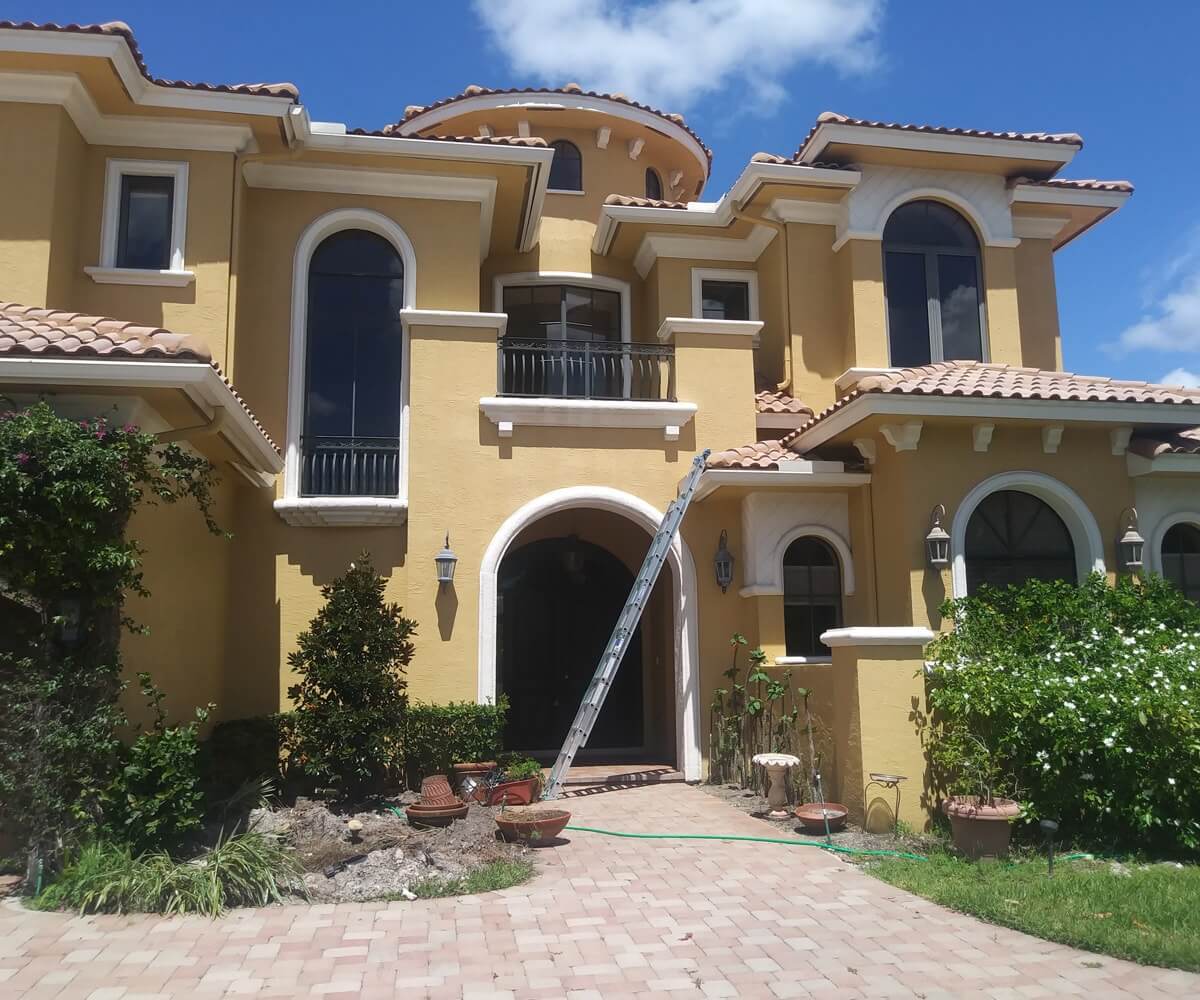
Impact Windows & South Florida Historic Homes: Preservation Rules vs. Hurricane Protection
Owning a historic home in South Florida is a source of immense pride. Whether you live in a 1920s Mediterranean Revival estate in Palm Beach, a Depression-era bungalow in Deerfield Beach, or a mid-century modern gem in Fort Lauderdale's historic districts, your home tells a story that cannot be replaced. But when hurricane season arrives, that story faces a very real threat.
The challenge for historic homeowners is significant: Florida law requires hurricane protection that meets today's stringent building codes, yet historic preservation boards impose equally firm rules about what you can and cannot change on a designated property. Navigating this tension requires expertise, patience, and a contractor who understands both sides of the equation.
This guide will walk you through everything you need to know about installing impact windows in historic Palm Beach and Broward County homes, including how preservation rules work, what approvals you will need, and how modern impact window technology can protect your home without compromising its character.
Why Hurricane Protection Is Non-Negotiable for Historic South Florida Homes
South Florida sits in one of the most hurricane-prone regions on Earth. The National Hurricane Center reports that the state of Florida has been struck by more hurricanes than any other U.S. state, and Palm Beach and Broward counties sit directly in the path of Atlantic storm tracks.
For historic homeowners, the stakes are especially high. Original wood windows, single-pane glass, and aging frames that contribute so much architectural character also represent some of the most vulnerable points in a home's envelope. A Category 3 hurricane generates wind speeds of 111 to 129 mph, and the flying debris that accompanies those winds can turn an irreplaceable 100-year-old window into splinters in seconds.
Beyond physical destruction, historic homes face a secondary threat: water intrusion. Once a window fails, rain-driven at hurricane-force speeds enters the structure, leading to mold, rot, and interior damage that can be catastrophic for homes built with original wood framing, plaster walls, and period-correct materials that are extremely difficult to source today.
If you are preparing your historic property for hurricane season, be sure to review our comprehensive South Florida Hurricane Season Prep Checklist 2024 for a full picture of what your property needs.
Understanding Historic Designation in Palm Beach and Broward Counties
Before you can plan any window replacement project, you need to understand exactly what type of historic designation your property carries. Designation type determines which rules apply and which boards must approve your project.
Local Historic Landmark Designation
Both Palm Beach County and Broward County have their own historic preservation programs that can designate individual properties or entire districts as locally significant. Locally designated properties must obtain a Certificate of Appropriateness (COA) from the local Historic Preservation Board before exterior changes can be made.
In Palm Beach County, the Historic Preservation Division oversees hundreds of designated sites. The Town of Palm Beach itself - which is a separate municipality - has particularly rigorous oversight of its landmark properties, including the Landmarks Preservation Commission, which reviews any changes to properties on the Town's official landmarks list.
In Broward County, the Historic Preservation Program has designated properties and districts in cities including Fort Lauderdale, Hollywood, Dania Beach, and Deerfield Beach. Each municipality may also have its own additional overlay requirements.
National Register of Historic Places
Properties listed on the National Register of Historic Places are subject to different rules. The National Register listing itself does not prevent changes to a private property - it is largely an honorary designation that comes with tax incentives. However, if your renovation uses federal or state historic tax credits, your project must comply with the Secretary of the Interior's Standards for Rehabilitation, which are quite specific about window replacement.
Historic District vs. Individual Landmark
There is an important distinction between being located within a historic district and being an individually designated landmark. Properties within a historic district may have neighborhood-level design guidelines that govern materials and appearance, but the requirements are often somewhat more flexible than those for individual landmarks. Individually designated landmarks typically face the strictest scrutiny because every detail of their architecture is considered significant.
The Certificate of Appropriateness Process
For most historic homeowners in Palm Beach and Broward County, the gateway to any approved window replacement is the Certificate of Appropriateness. This process can feel intimidating, but understanding it makes the path much clearer.
What Preservation Boards Look For
Historic preservation boards evaluate window replacement requests based on several core criteria:
Visual compatibility - Does the proposed window match the size, shape, and proportions of the original? Preservation boards pay close attention to the width of muntins (the dividers between panes), the overall window profile depth, and the visual weight of the frame.
Material compatibility - Original Mediterranean Revival and Craftsman bungalow windows in South Florida were typically made of wood, sometimes with steel casements. Boards will evaluate whether proposed materials - including aluminum, fiberglass, or wood-clad frames - are visually consistent with the original.
Reversibility - Preservation philosophy strongly favors changes that can be undone. While replacing windows is not technically reversible, proposals that require the least alteration to original openings are looked upon more favorably.
Consistency with the Secretary of the Interior's Standards - Even for locally designated properties, many boards reference these federal standards as a benchmark for evaluating appropriateness.
Preparing Your Application
A strong COA application for impact window replacement in a historic home should include:
- High-quality photographs of existing windows from both inside and outside
- Detailed specifications of the proposed impact windows including frame profiles, glass thickness, and color options
- Manufacturer cut sheets showing the window's dimensions and appearance
- A written statement explaining how the proposed windows meet the board's design guidelines
- If available, documentation showing the historic configuration of the original windows
Working with a contractor who has experience navigating the COA process in Palm Beach and Broward County historic districts is invaluable at this stage. At Window Guys of Florida, our team has guided homeowners through this process across dozens of historic properties. Learn more about our experience and approach here.
How Modern Impact Window Technology Meets Historic Preservation Standards
The good news for historic homeowners is that the impact window industry has made enormous strides in producing products that satisfy preservation requirements while delivering full hurricane protection. The days of choosing between an ugly, out-of-place impact window and your home's historic character are largely behind us.
Simulated Divided Lights
One of the most significant advances for historic home applications is the simulated divided light (SDL) window. Traditional historic windows feature true divided lights, where multiple small panes of glass are separated by wooden muntins. SDL windows replicate this appearance using a single large pane of impact-rated laminated glass with decorative grilles applied to both the interior and exterior surfaces, with a spacer bar embedded in the insulating glass unit.
When the grille profiles and dimensions are matched to the originals, SDL impact windows are nearly indistinguishable from authentic divided light windows, especially to the eye of a passerby. Many South Florida historic preservation boards have approved SDL impact windows as compatible replacements.
Slimline Frame Profiles
Historic wood windows tend to have narrower frame profiles than standard modern windows. Preservation boards often object to impact window replacements because the frames are too thick and visually heavy. Several manufacturers now produce slimline frame profiles specifically designed to minimize the visual difference from original windows. Brands like PGT and CGI, both of which Window Guys of Florida carries as authorized dealers, offer profiles engineered to historic replacement specifications.
Bronze and Custom Finishes
Many historic South Florida homes, particularly Mediterranean Revival properties and Spanish Colonial homes in Palm Beach, featured bronze or dark-finished steel casement windows. Today's impact window manufacturers offer powder-coat finishes in a wide range of historically appropriate colors, including dark bronze, weathered brass, and custom colors matched to original hardware.
Wood-Clad Impact Windows
For properties where the preservation board requires wood on the interior, wood-clad impact windows offer an elegant solution. These windows have an aluminum exterior engineered to meet Miami-Dade County's stringent impact requirements, with a real wood interior finish that preserves the warmth and authenticity of original woodwork. Andersen, one of our authorized brands, produces wood-clad options well-suited to historic applications.
Navigating Permits: Building Codes and Preservation Rules Together
Historic homeowners in Palm Beach and Broward County must obtain two separate types of approval before proceeding with impact window replacement.
Building Department Permits
Florida's Building Code requires that all replacement windows in the wind-borne debris region (which covers the entirety of Palm Beach and Broward counties) meet impact resistance standards or be protected by approved storm shutters. All impact window installations must be permitted through the local building department, inspected, and closed out with a final inspection.
This permit process verifies that the windows meet the Florida Product Approval for the specific wind loads required at your location, that the installation method is code-compliant, and that the structural connections are adequate. Learn more about flood zone and wind compliance considerations here.
Historic Preservation Approval
Separate from the building permit, you must obtain your Certificate of Appropriateness from the relevant preservation authority before work begins. In most jurisdictions, the building department will not issue a permit for work on a historic property without proof that preservation approval has been granted.
This sequencing is important: plan for the COA process first, as it can take anywhere from a few weeks to several months depending on your jurisdiction and the complexity of your project.
The Interplay Between Codes
Sometimes building code requirements and preservation guidelines appear to conflict. For example, a preservation board may prefer that you repair rather than replace original windows, but the building code requires impact-rated glazing in the wind-borne debris region. In these cases, Florida law provides a pathway: historic structures are recognized under the Florida Building Code with certain accommodations, and experienced contractors can help you document the case for why replacement is the appropriate path.
Additionally, if your historic home has never had a wind mitigation inspection, completing one before and after your impact window installation can unlock significant home insurance discounts that help offset the investment.
Special Considerations by Architectural Style
Mediterranean Revival and Spanish Colonial Homes
Mediterranean Revival is the dominant historic architectural style in coastal Palm Beach and Broward County, with concentrations in Palm Beach, Boca Raton, Hollywood, and Fort Lauderdale. These homes typically feature arched windows, decorative ironwork, and casement-style openings that present specific challenges for impact window replacement.
For arched windows, which are very common on Mediterranean Revival facades, manufacturers can produce impact-rated windows with custom arch configurations. The key is ensuring the arch radius and the decorative elements in the arch are faithfully reproduced. Some historic homes have Moorish-influenced geometric window patterns that require custom fabrication.
Craftsman and Frame Vernacular Bungalows
The bungalow districts of Fort Lauderdale, Dania Beach, and Deerfield Beach feature Craftsman and vernacular frame homes from the 1920s through the 1940s. These homes typically have double-hung sash windows with divided lights in the upper sash - often a 6-over-1 or 9-over-1 pattern. Impact windows with SDL grilles accurately replicating these patterns are widely available and have been approved in multiple Broward County historic districts.
Mid-Century Modern
South Florida has a rich mid-century modern heritage, particularly in Fort Lauderdale and areas of Palm Beach County. Mid-century homes often feature large expanses of glass with minimal frames - a look that is actually more achievable in today's impact window market than traditional divided-light styles. Large-format impact windows and impact sliding glass doors can replicate the open, glass-forward aesthetic of mid-century design while providing full hurricane protection.
Financial Incentives for Historic Home Impact Window Projects
One of the silver linings of investing in a historic property is that several financial incentive programs can help offset the cost of preservation-compliant impact window installation.
Florida Historic Preservation Grant Program
The Florida Division of Historical Resources administers a Special Category Grant program that can fund preservation work on designated historic properties, including work that improves a structure's resilience. While grant funding is competitive, properties in Palm Beach and Broward County have successfully obtained grants for preservation-compliant renovation projects.
Federal Historic Tax Credit
For income-producing historic properties - including vacation rentals or rental homes - the Federal Historic Tax Credit provides a 20% tax credit for qualified rehabilitation expenses. Windows that meet the Secretary of the Interior's Standards can qualify as part of a broader rehabilitation project. If your historic home doubles as a rental property, this credit deserves serious attention alongside the benefits described in our guide to impact windows for South Florida rental properties.
Florida Historic Preservation Property Tax Exemption
Florida law allows counties and municipalities to exempt the assessed value of qualifying improvements to historic properties from ad valorem property taxation for up to 10 years. Many Palm Beach and Broward County municipalities participate in this program, and approved hurricane protection improvements on designated historic properties may qualify.
Insurance Premium Reduction
Beyond formal incentive programs, homeowners who install approved impact windows typically see meaningful reductions in their homeowner's insurance premiums. In South Florida's challenging insurance market, this reduction can be substantial - sometimes in the range of 20 to 45 percent depending on the insurer and the specific coverage structure. These ongoing savings make the higher initial cost of preservation-compatible impact windows more financially manageable over time.
Choosing the Right Contractor for Historic Impact Window Work
Not all impact window contractors have the knowledge or patience to navigate historic preservation requirements. Choosing the wrong contractor can result in failed COA applications, code violations, or - worst of all - damage to irreplaceable historic fabric that cannot be undone.
When evaluating contractors for a historic home impact window project, look for:
Experience with historic preservation boards - Ask specifically whether the contractor has obtained COA approvals in Palm Beach or Broward County historic districts. Request references from historic home clients.
Familiarity with preservation-compatible products - The contractor should be able to name specific product lines appropriate for historic applications and explain why they are suitable for your home's architectural style.
Proper licensing and insurance - Florida requires licensed contractors for all permitted window work. Verify the contractor's license with the Florida Department of Business and Professional Regulation (DBPR).
Authorization from top manufacturers - Access to the right products matters. Window Guys of Florida is an authorized dealer for PGT, CGI, ES Windows, Andersen, and other leading manufacturers, giving us access to the full range of preservation-compatible options.
25+ years of South Florida experience - Longevity in the South Florida market matters because it means the contractor has navigated multiple cycles of building code updates, has established relationships with local building departments, and has the institutional knowledge to handle complex historic home projects.
Contact us for a free consultation to discuss your historic home's specific needs. We serve all of Palm Beach and Broward County with the expertise your property deserves.
Tips for a Smooth Historic Impact Window Project
Drawing on our experience with dozens of historic home impact window projects across South Florida, here are the practical steps that lead to the best outcomes:
Research your property's designation status early. Contact your municipality's planning or historic preservation department to confirm exactly what type of designation applies and which board has authority over your property.
Request a pre-application meeting. Many preservation boards offer informal pre-application consultations where staff can give you early feedback on your approach before you invest in full application materials.
Document your existing windows thoroughly. Before any work begins, photograph every window from multiple angles in good lighting. This documentation protects you and provides the reference material for the COA application.
Involve your contractor in the COA process. An experienced contractor can provide technical specifications and manufacturer documentation that significantly strengthens your application.
Build extra time into your project schedule. COA review timelines vary, and board meetings may occur only monthly. Plan for the preservation approval process to take 60 to 90 days in complex cases.
Keep records of all approvals. Store copies of your COA, building permits, final inspections, and manufacturer documentation together. These records are valuable for future sales, insurance claims, and ongoing compliance.
Conclusion: Protecting History and Your Family
South Florida's historic homes are irreplaceable assets - culturally, architecturally, and personally. The good news is that protecting them with hurricane-rated impact windows no longer requires choosing between authenticity and safety. With the right products, the right contractor, and a clear understanding of the approval process, you can fortify your historic home against South Florida's most powerful storms while honoring the architectural legacy that makes it special.
The impact windows and impact doors available today are engineered to satisfy the demands of both preservation boards and Florida's strict building codes. At Window Guys of Florida, we have spent more than 25 years helping South Florida homeowners navigate exactly this kind of complex, high-stakes project.
Your historic home has survived decades of South Florida weather. With the right hurricane protection in place, it can survive many more. Reach out to our team today for a free, no-obligation consultation - we would be honored to help you protect what matters most.
Frequently Asked Questions
Can I install impact windows in a Palm Beach historic landmark home?
Yes, but the process requires advance approval from the relevant historic preservation authority. In the Town of Palm Beach, that means obtaining a Certificate of Appropriateness from the Landmarks Preservation Commission before any work begins. Modern impact windows with historically compatible profiles, simulated divided lights, and appropriate finishes have been approved on Palm Beach landmark properties when the application is well-prepared. Working with a contractor experienced in the COA process is essential. Contact Window Guys of Florida to discuss your specific property.
Will a historic preservation board approve impact windows that look different from my originals?
Generally, no. Historic preservation boards evaluate proposed windows based on their visual compatibility with the original historic windows. If your original windows were 6-over-1 double-hung wood sash windows, the board will expect the proposed impact windows to closely replicate that appearance. The good news is that today's manufacturers produce impact-rated windows with simulated divided lights and slimline frames that can accurately mimic the appearance of original historic windows. A well-matched SDL impact window is far more likely to receive approval than a standard modern impact window.
Do I need both a building permit and historic preservation approval for impact window replacement in a Broward County historic district?
Yes. These are two separate approval processes. You will need a Certificate of Appropriateness from the local historic preservation board and a building permit from the municipal building department. In most cases, the building department will require proof of preservation approval before issuing the building permit. Both approvals must be in hand before work begins. An experienced contractor can help you coordinate the sequencing of these applications efficiently.
Are there financial incentives available to help offset the cost of preservation-compatible impact windows?
Yes, several programs can help. Florida offers a Historic Preservation Property Tax Exemption that can apply to qualifying improvements on designated historic properties in participating municipalities. Income-producing historic properties may be eligible for the Federal Historic Tax Credit. Additionally, installing impact windows typically qualifies for significant homeowner's insurance discounts through the wind mitigation report process. Review our detailed guide to impact window insurance discounts in South Florida to understand how these savings work.
What happens if I replace windows in my historic home without getting preservation approval?
Unauthorized alterations to a locally designated historic property can result in serious consequences, including stop-work orders, fines, and a requirement to reverse the work at your own expense - even if the replacement windows are code-compliant from a building perspective. In some cases, the cost of restoring original windows can far exceed what you would have spent on the proper approval process. Always secure your Certificate of Appropriateness before beginning any exterior work on a historic property.
How long does the historic preservation approval process typically take in Palm Beach and Broward County?
Timelines vary considerably depending on the municipality, the complexity of the project, and the review schedule of the local preservation board. Simple projects with well-prepared applications in jurisdictions with active staff support may be approved in 30 to 45 days. More complex projects - particularly those involving individually designated landmarks in the Town of Palm Beach - can take 60 to 90 days or longer if the board requests additional information or conditions its approval. Planning ahead and involving an experienced contractor early in the process minimizes delays. Reach out to our team to begin planning your project timeline today.
Frequently Asked Questions
Can I install impact windows in a Palm Beach historic landmark home?
Yes, but the process requires advance approval from the relevant historic preservation authority. In the Town of Palm Beach, that means obtaining a Certificate of Appropriateness from the Landmarks Preservation Commission before any work begins. Modern impact windows with historically compatible profiles, simulated divided lights, and appropriate finishes have been approved on Palm Beach landmark properties when the application is well-prepared. Working with a contractor experienced in the COA process is essential. Contact Window Guys of Florida to discuss your specific property.
Will a historic preservation board approve impact windows that look different from my originals?
Generally, no. Historic preservation boards evaluate proposed windows based on their visual compatibility with the original historic windows. If your original windows were 6-over-1 double-hung wood sash windows, the board will expect the proposed impact windows to closely replicate that appearance. Today's manufacturers produce impact-rated windows with simulated divided lights and slimline frames that can accurately mimic the appearance of original historic windows. A well-matched SDL impact window is far more likely to receive approval than a standard modern impact window.
Do I need both a building permit and historic preservation approval for impact window replacement in a Broward County historic district?
Yes. These are two separate approval processes. You will need a Certificate of Appropriateness from the local historic preservation board and a building permit from the municipal building department. In most cases, the building department will require proof of preservation approval before issuing the building permit. Both approvals must be in hand before work begins. An experienced contractor can help you coordinate the sequencing of these applications efficiently.
Are there financial incentives available to help offset the cost of preservation-compatible impact windows?
Yes, several programs can help. Florida offers a Historic Preservation Property Tax Exemption that can apply to qualifying improvements on designated historic properties in participating municipalities. Income-producing historic properties may be eligible for the Federal Historic Tax Credit. Additionally, installing impact windows typically qualifies for significant homeowner's insurance discounts through the wind mitigation report process. Review our detailed guide to impact window insurance discounts in South Florida to understand how these savings work.
What happens if I replace windows in my historic home without getting preservation approval?
Unauthorized alterations to a locally designated historic property can result in serious consequences, including stop-work orders, fines, and a requirement to reverse the work at your own expense - even if the replacement windows are code-compliant from a building perspective. In some cases, the cost of restoring original windows can far exceed what you would have spent on the proper approval process. Always secure your Certificate of Appropriateness before beginning any exterior work on a historic property.
How long does the historic preservation approval process typically take in Palm Beach and Broward County?
Timelines vary considerably depending on the municipality, the complexity of the project, and the review schedule of the local preservation board. Simple projects with well-prepared applications may be approved in 30 to 45 days. More complex projects - particularly those involving individually designated landmarks in the Town of Palm Beach - can take 60 to 90 days or longer if the board requests additional information. Planning ahead and involving an experienced contractor early minimizes delays. Reach out to our team to begin planning your project timeline today.